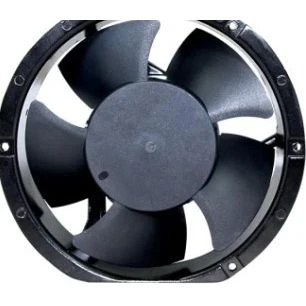
Axial flow fans, with a shroud only near the impeller trailing edge, are widely used in the outdoor units of split-type room air conditioners. In these systems, besides requiring a compact structure and large air volume, low noise is a crucial indicator. However, compared to low-pressure fans used for power generation, these low-pressure fans have many different characteristics in structural configuration, design methods, and internal flow phenomena, making low-noise design and understanding of their internal flow mechanisms challenging. Domestic and international research on noise reduction for these fans mostly employs experimental methods or specific methods after blade molding, while research on improving the performance of air conditioner fan blades through sweeping design is rarely reported.
Based on the conventional quasi-three-dimensional design method for axial flow impellers, this paper employs leading-edge sweeping technology and applies CFD/CAD methods to perform coupled design of air conditioner axial flow fans to improve the internal flow conditions of the fan at the design point, providing a basis for noise reduction. The internal flow of the entire outdoor unit was calculated and analyzed using the three-dimensional Navier-Stokes equations and the Spalart-Allmaras turbulence model to predict the performance of the fan, thereby reducing the corresponding experimental workload.