

The working principle of a blower is based on the kinetic energy transfer theory in fluid mechanics. When the impeller rotates at high speed driven by a motor, momentum exchange occurs between the blades and gas molecules. Under the action of centrifugal force, the gas is thrown out along the outer edge of the impeller, forming a high-pressure airflow. This energy conversion process follows Bernoulli's equation, that is, the sum of kinetic energy and static pressure energy is conserved. Compared with ordinary fans, blowers effectively convert the kinetic energy of gas into pressure energy through a specially designed volute structure, with a typical pressure range of 0.1-1.5 kgf/cm², which is the key to its ability to deliver air over long distances.
Working Principle of a Blower
Popular Products
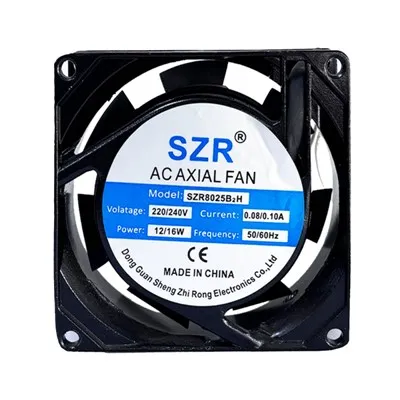
80mm AC Axial Fan
SZR’s 80mm AC Axial Fan is developed for compact electrical systems requiring reliable airflow performance in...
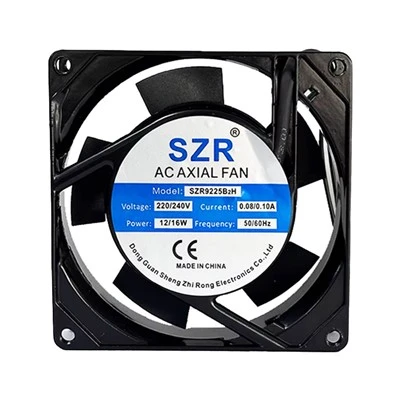
92mm AC Axial Fan
Designed for industrial ventilation systems, SZR’s 92mm AC axial fan series achieves an effective balance between...
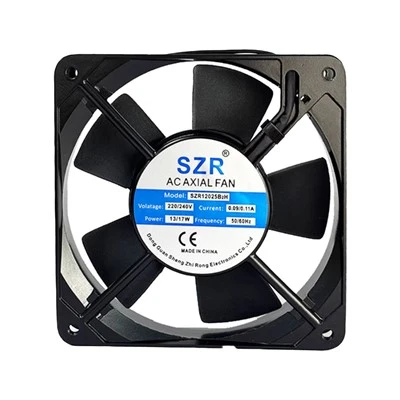
120mm AC Axial Fan
The 120mm AC axial fan series from SZR is engineered for applications requiring enhanced airflow penetration and...
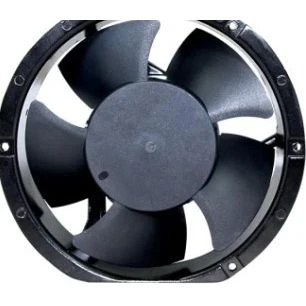
172mm AC Axial Fan
SZR’s 172mm AC fan series is developed for industrial environments with substantial heat generation and nonstop...
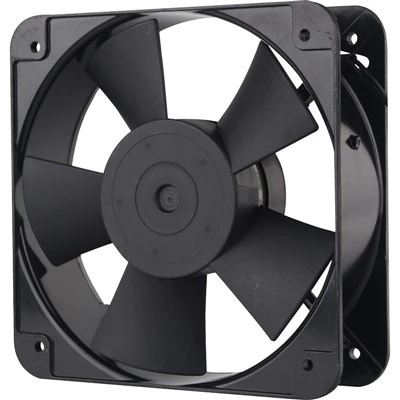
200mm AC Axial Fan
The SZR 20060 AC axial fan is designed for applications requiring rapid heat extraction and high-volume air...
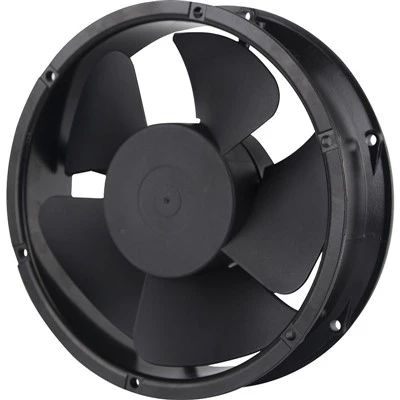
220mm AC Axial Fan
The 22060 AC axial fan from SZR is specially developed for large-scale airflow management and HVAC ventilation...