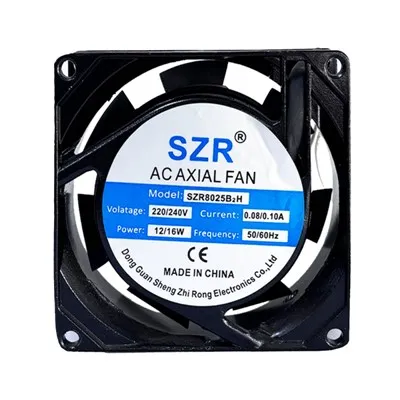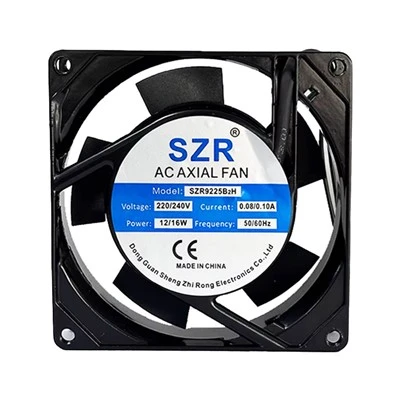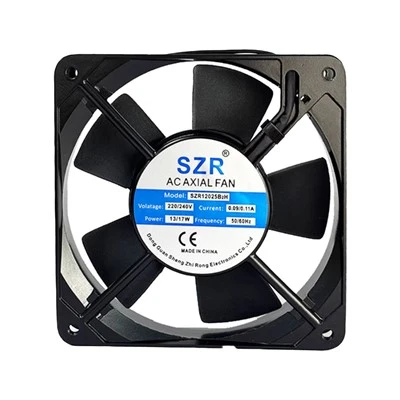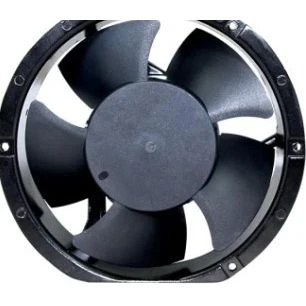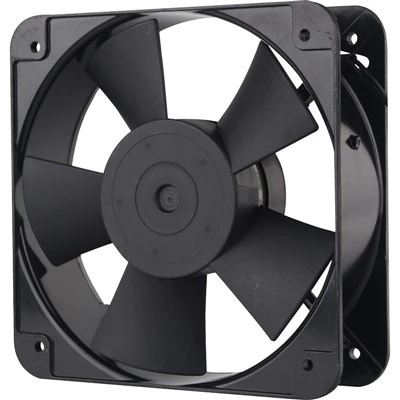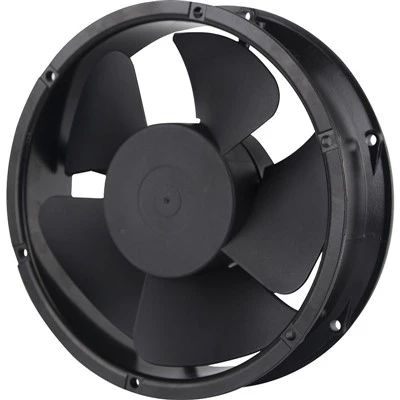
The SZR vacuum‑coated waterproof fan reaches IP68 protection rating. It can operate continuously under 50 cm of water for 72 hours without burnout, and is mainly applied to equipment working in harsh environments such as high‑temperature and high‑humidity conditions.
1. Brief Introduction to Vacuum Coating
Parylene vacuum coating technology (CVD, Chemical Vapor Deposition) was originally developed for the U.S. aerospace industry, communication satellites and national defense military applications. It was later gradually popularized for civilian commercial use, with a history of around 40 years to date. Nowadays, products and components tend to be compact and miniaturized. Conventional surface coating processes such as Epoxy, Urethane, Silicone and ED can no longer meet these stringent requirements.
2. Principle of Vacuum Coating
For Parylene vacuum coating technology, raw materials are placed in a vacuum environment (10⁻³ Torr), vaporized and pyrolyzed into nano‑scale molecular streams. These streams flow into the room‑temperature coating chamber. Through vapor‑phase deposition, they evenly penetrate internal gaps and surface pinholes of coated objects, and polymerize into a complete, thin, uniform and high‑density micron‑scale film layer. Its superior conformal coating performance is fundamentally different from and far better than conventional immersion‑based or spray‑type surface treatment methods.
3. Vacuum Coating Process
Powder‑form dimer coating material goes through vaporization (150 °C) and pyrolysis (650 °C). It then enters the coating chamber and undergoes vapor‑phase deposition at ambient temperature to form a polymer film.
4. Functions of Vacuum Coating
- Wide operating temperature range: suitable for ambient temperatures from ‑200 °C to +200 °C.
- Stress‑free surface: no impact on circuit sensitivity.
- Ultra‑thin film layer: minimal influence on surface heat dissipation.
- Low friction coefficient: delivers dry‑film surface lubrication effect.
- Organic compatibility: no biological rejection occurs.
- Transparency: the film achieves optical‑grade quality.
- Excellent conformability: improves positioning performance of electronic parts and mechanical assemblies.
- Solvent and corrosion resistance: insoluble in solvents; resistant to erosion by acids and alkalis.
- High barrier property: extremely low permeability to oxygen and moisture; blocks ion migration.
- Electrical insulation: withstands 3000 V AC high‑voltage.